

When disaster strikes, every second counts. Having effective disaster response strategies in place can mean the difference between chaos and control, injury and safety, life and death. For residents and businesses in Southeastern PA and Southern New Jersey, understanding how to respond quickly and correctly during emergencies such as floods, fires, or mold outbreaks is crucial. This article will explore essential disaster response strategies that can save lives in critical moments, guiding you through preparedness, immediate actions, and recovery steps. Whether you face water damage, fire, or mold issues, being equipped with these strategies will help you protect your loved ones and property.
What Is Disaster Response?
Disaster response refers to the actions taken immediately after an emergency event to protect life, property, the environment, and basic human needs. These strategies encompass evacuation, communication, first aid, and infrastructure protection, among other steps. The goal of disaster response is rapid action to minimize harm and set the stage for recovery.
In Southeastern PA and Southern New Jersey, disaster response often involves reacting to risks like flooding from hurricanes, fires in residential areas, or widespread mold contamination due to water damage. Restoration 365 specializes in managing these aftermaths by providing swift, professional restoration services that complement your initial disaster response efforts.
Essential Disaster Response Strategies to Save Lives
Implementing proper disaster response strategies can help you navigate emergencies safely and effectively. Here are some vital steps:
1. Prepare an Emergency Plan
Preparation is the foundation of any successful disaster response. Create a detailed emergency plan that addresses:
- How your household or business will communicate during a disaster
- Evacuation routes and safe meeting points
- Location of emergency supplies and first aid kits
- Designated contacts outside the affected area to relay information
Practicing this plan regularly ensures everyone knows their role and can act without hesitation.
2. Establish a Communication Protocol
Effective disaster response hinges on communication. Ensure you have multiple communication methods such as cell phones, battery-powered radios, and even satellite phones if needed. Share emergency contact lists with family members or employees. This helps coordinate evacuations, alert emergency services, and obtain up-to-date information on the situation.
3. Prioritize Safety and Evacuation
In critical moments, protecting human life is always the priority. Know when to evacuate and do so calmly but swiftly. Follow instructions from local authorities and avoid re-entering dangerous zones until they are declared safe.
4. Perform Immediate First Aid
Be trained in basic first aid and CPR to assist the injured while waiting for emergency responders. Having first aid supplies easily accessible greatly improves the outcomes of disaster response efforts.
5. Assess Damage and Prevent Further Risks
After immediate threats pass, assess damage quickly to prevent additional hazards such as electrical fires from water intrusion or structural collapse. Shutting off utilities if safe to do so can avert secondary disasters.
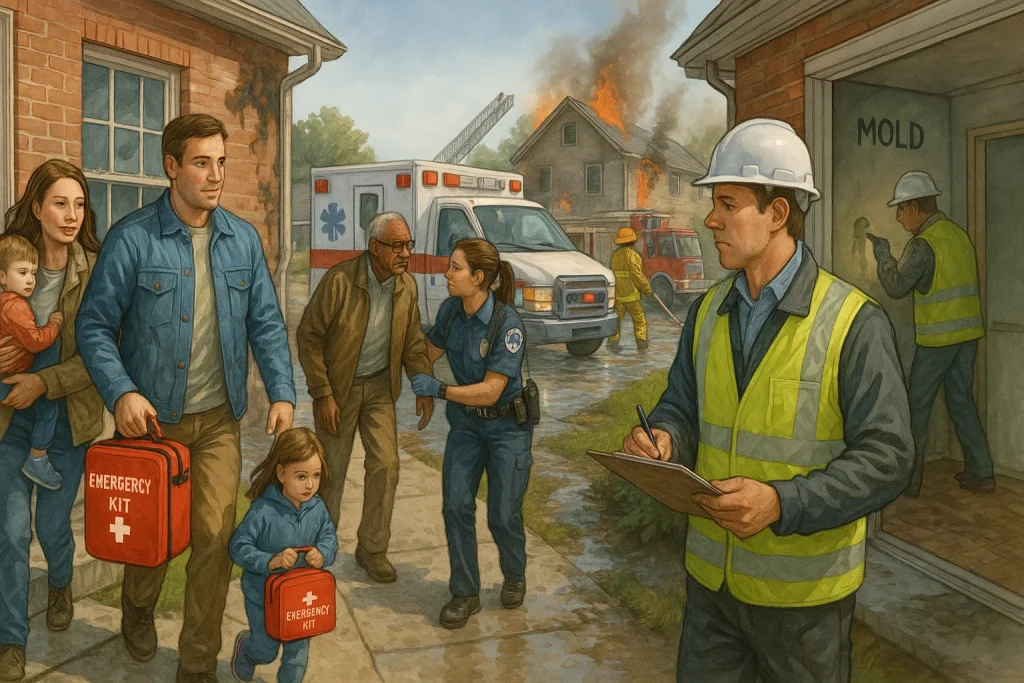
Disaster Response Strategies for Specific Emergencies
Tailoring your disaster response to the type of emergency ensures more effective outcomes. Let’s examine approaches for three common scenarios in Southeastern PA and Southern New Jersey:
Disaster Response Strategies for Water Damage and Flooding
Flooding is an increasingly frequent hazard in our region. After ensuring safety, consider these steps:
- Avoid floodwaters which may be contaminated or electrically charged
- Shut off electricity and gas only if it can be done safely
- Document damage with photos for insurance claims
- Contact professional water damage restoration specialists immediately to begin cleanup and prevent mold growth
Restoration 365 offers 24/7 water damage response to minimize property loss and health risks efficiently.
Disaster Response Strategies for Fire Emergencies
Fires can escalate quickly and present severe risks. Effective response includes:
- Use the nearest safe exit to evacuate immediately
- Avoid inhaling smoke and stay low to the ground if trapped
- Once safe, call 911 and do not return inside until cleared by authorities
- After fire suppression, arrange for fire damage restoration to address smoke and structural issues promptly
Our trained technicians at Restoration 365 specialize in comprehensive fire damage restoration to help you recover quickly.
Disaster Response Strategies for Mold Contamination
Mold often develops after water damage and can pose serious health hazards. Key response actions include:
- Avoid disturbing visible mold to prevent airborne spores
- Increase ventilation and reduce humidity levels if safe
- Contact mold remediation professionals promptly for thorough removal
- Ensure affected areas are dried completely to prevent recurrence
Restoration 365 provides mold inspection and remediation services that safeguard your indoor air quality and overall health.
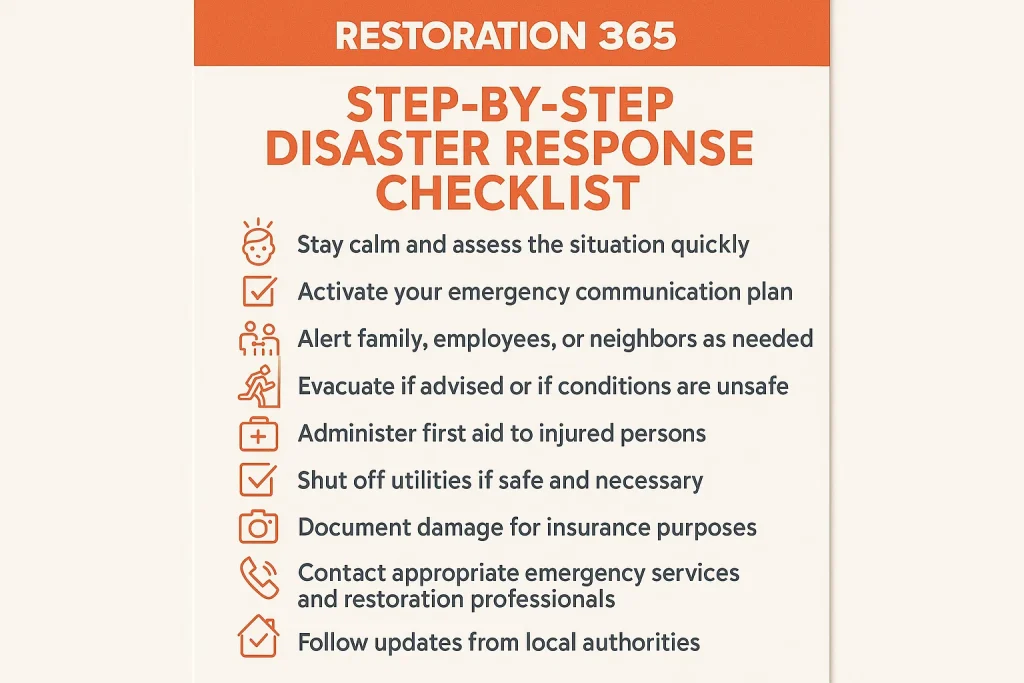
A Step-by-Step Disaster Response Checklist
To implement these strategies effectively, use this simple checklist during emergencies:
- Stay calm and assess the situation quickly
- Activate your emergency communication plan
- Alert family, employees, or neighbors as needed
- Evacuate if advised or if conditions are unsafe
- Administer first aid to injured persons
- Shut off utilities if safe and necessary
- Document damage for insurance purposes
- Contact appropriate emergency services and restoration professionals
- Follow updates from local authorities
- Begin recovery and restoration after clearance
Adhering to this checklist can improve safety outcomes drastically during critical moments.
Frequently Asked Questions About Disaster Response
Q1: What is the most important step in disaster response?
A1: The most important step is ensuring human safety through evacuation and first aid. All other response actions support this priority.
Q2: How soon should I contact a professional after water damage?
A2: Contact restoration professionals like Restoration 365 immediately after ensuring safety. Prompt action prevents mold growth and further structural damage.
Q3: Can I perform mold remediation myself?
A3: Small mold issues may be handled by homeowners, but professional mold remediation is essential for extensive contamination to ensure thorough removal and prevent recurrence.
Why Partner with Restoration 365 for Disaster Response in Southeastern PA and Southern New Jersey?
Disasters can happen unexpectedly and escalate rapidly. With Restoration 365’s expert water, fire, and mold damage services, you gain a trusted partner who understands the local environment and challenges. Our 24/7 emergency response teams arrive quickly to stabilize damage, begin restoration, and support your full recovery. We work closely with insurance companies to ease your burden and restore your home or business to pre-disaster condition.
By combining well-executed disaster response strategies with our professional restoration solutions, you safeguard your property and loved ones against the devastating effects of emergencies.
Conclusion
Disaster response is not just about reacting but preparing and acting strategically to save lives and reduce damage in critical moments. By developing an emergency plan, communicating effectively, prioritizing safety, and engaging experts like Restoration 365, Southeastern PA and Southern New Jersey residents and businesses can face disasters with confidence and resilience.
Remember, preparation today saves lives tomorrow. If your property has suffered from water damage, fire, or mold, contact Restoration 365 immediately for quick, professional disaster response and restoration services you can trust.
For more information on emergency management and disaster preparedness, visit the Federal Emergency Management Agency (FEMA) website.
Call us now at Restoration 365 to schedule an emergency consultation or restoration service and take the first step toward safeguarding your home or business against disaster. Your safety is our top priority.

