

Basement waterproofing is one of the smartest investments you can make in your home, especially in moisture-prone areas like Southeastern Pennsylvania and Southern New Jersey. Whether you see a little dampness on the walls or you are dealing with standing water after every heavy rain, the right strategies can protect your foundation, your belongings and your indoor air quality.
This guide walks you through the most effective basement waterproofing methods, how to spot early warning signs and when it is time to bring in professionals like Restoration 365 to handle the problem before it becomes a crisis.
Why Basement Waterproofing Matters More Than You Think
A damp or wet basement is not just an inconvenience. Over time, water issues can lead to:
- Structural damage to your foundation
- Rotting wood framing and floor systems
- Mold growth and poor indoor air quality
- Electrical hazards and damaged mechanical systems
- Decreased home value and failed home inspections
The soil and climate in Southeastern PA and Southern New Jersey make basements especially vulnerable. We see a lot of:
- Clay and silty soils that hold water against foundations
- High water tables near rivers and coastal areas
- Heavy, sudden rain events that overwhelm drainage systems
- Older stone and block foundations that were never designed with modern basement waterproofing in mind
If you can smell mustiness, see white powdery residue on walls, notice peeling paint or find water on the floor after storms, your home is already telling you it needs attention.
How Water Actually Gets Into Your Basement
Before you can choose the best basement waterproofing solution, you need to understand how water is getting inside. Most basement moisture problems come from one or more of these sources.
Surface water problems around the home
Water often starts at the surface:
- Poor grading that slopes toward the foundation instead of away
- Short or missing downspouts that dump roof water next to the house
- Clogged or undersized gutters
- Concrete patios or sidewalks tilted toward the basement wall
When rainwater collects along your foundation, it increases hydrostatic pressure against the walls and finds any gap, crack or joint it can to enter.
Groundwater and hydrostatic pressure
In many parts of Southeastern PA and South Jersey, the water table rises after heavy rain or snowmelt. That water saturates the soil and exerts steady pressure on your basement walls and floor.
Common entry points:
- Cold joints where the basement floor meets the walls
- Hairline cracks in poured concrete
- Mortar joints in block or stone foundations
- Penetrations for pipes, electrical lines and sump discharge
Interior moisture and condensation
Not all moisture problems are leaks. Sometimes it is condensation:
- Warm, humid summer air hits cool basement walls and sweats
- Uninsulated cold-water pipes drip and create damp spots
- Poor ventilation traps moisture from laundry, bathrooms or cooking
Basement waterproofing should address both liquid water infiltration and indoor humidity so you solve the problem instead of chasing symptoms.

Interior Basement Waterproofing Solutions
Interior basement waterproofing focuses on managing water after it gets inside. These solutions are often less invasive and more budget friendly, especially for finished spaces.
Interior sealers and coatings for basement waterproofing
Interior sealers are a first line of defense, not a cure-all. They can help:
- Reduce minor seepage through porous concrete or block
- Improve the appearance of stained or chalky walls
- Cut down on musty odors and surface dampness
Types include:
- Cementitious waterproof coatings that bond to masonry
- Acrylic and elastomeric coatings that can bridge hairline cracks
- Silicate sealers that penetrate concrete and harden within the pores
Interior coatings are most effective when:
- Water issues are minor and intermittent
- There is no active water coming through joints or cracks under pressure
- The exterior drainage conditions are reasonably good
If you see bubbling paint or the coating is flaking off, it usually means water pressure behind the wall is too strong for coatings alone. In those cases, more robust basement waterproofing is needed.
French drains and interior perimeter drainage
For ongoing seepage or minor flooding, an interior French drain system is one of the most reliable solutions.
How it works:
- A narrow trench is cut around the inside perimeter of the basement floor
- Perforated drain pipe is placed in the trench and pitched to a sump pit
- The trench is filled with clean gravel and the floor is patched
- Water that reaches the footing drains into the pipe and is carried to the sump pump
Benefits:
- Relieves hydrostatic pressure under and beside the slab
- Works even when exterior access is difficult or impossible
- Can be installed in sections to address the worst areas first
In Southeastern PA and South Jersey, interior French drains are one of the most common basement waterproofing solutions we install at Restoration 365 because they work well with older homes and finished basements.
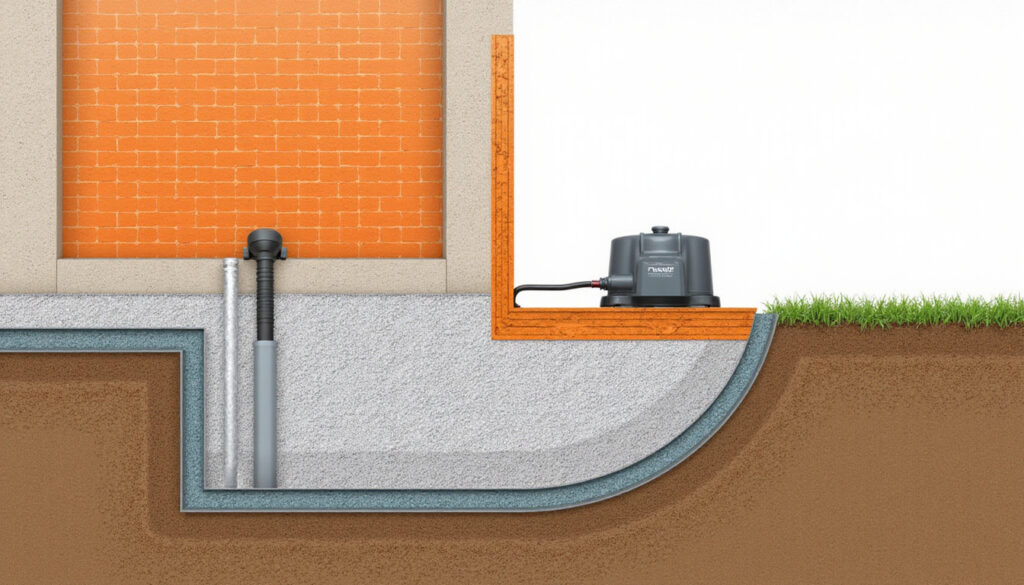
Sump pumps as a key part of basement waterproofing
A sump pump is the heart of many interior basement waterproofing systems. It collects water from drains or directly from the ground and discharges it away from the home.
Key considerations:
- Size and capacity: Larger basements or high water tables may need higher capacity pumps
- Power backup: Battery or water-powered backup pumps are critical to keep your basement dry during storms when power often goes out
- Discharge line: The pipe should carry water far enough away from the foundation and be protected from freezing in winter
A well-designed sump system:
- Has an airtight lid to reduce humidity and odors
- Includes a check valve to prevent backflow
- Is serviced regularly to clear debris and test operation
Without a reliable sump pump, many interior drainage systems cannot do their job.
Exterior Basement Waterproofing Strategies
Exterior basement waterproofing tackles water at the source before it has a chance to reach the interior. These methods are more involved but also more comprehensive.
Foundation excavation and waterproof membranes
For persistent leaks and major foundation issues, full exterior waterproofing is often the gold standard.
Typical process:
- Excavate soil along the leaking walls all the way down to the footing
- Clean and repair the foundation surface, filling cracks and voids
- Apply a waterproof membrane or coating to the exterior wall
- Install drainage board or protection board over the membrane
- Place perforated drain tile at the footing, surrounded by gravel
- Backfill with proper materials that allow drainage
Modern exterior basement waterproofing uses flexible, rubberized membranes or composite systems that handle minor movement without cracking.
This approach is especially effective for:
- New construction where access is easy
- Severe water intrusion through walls
- Homes with significant foundation settlement or structural concerns
Exterior French drains and surface drainage improvements
Even without full excavation, you can significantly reduce basement water problems by managing surface water correctly.
Exterior strategies include:
- Installing French drains to intercept and redirect surface water
- Adding swales or shallow ditches to carry water away from the foundation
- Regrading soil so it slopes away from the house for at least 6 feet
- Using gravel or stone in problem spots instead of mulch that traps moisture
When combined with proper gutters and downspouts, these measures can dramatically reduce the amount of water pressing on basement walls.
Managing Gutters, Downspouts and Grading for Better Basement Waterproofing
Many homeowners can knock out a large portion of their basement water issues with surprisingly simple exterior maintenance.
Gutters and downspouts make or break basement waterproofing
Your roof collects thousands of gallons of water during a storm. If your gutter system is not doing its job, that water ends up right at your foundation.
Key steps:
- Clean gutters at least twice a year, more often if you have overhanging trees
- Repair sagging or disconnected sections so water flows properly
- Extend downspouts at least 6 to 10 feet away from the foundation using rigid pipe or properly sloped extensions
- Make sure downspout discharge is not directed toward a neighbor’s foundation or low spot
The Environmental Protection Agency emphasizes proper drainage and grading as a core strategy to prevent moisture intrusion and mold in homes.
Regrading and hardscape adjustments
Look at the first 6 to 10 feet of soil around your house:
- The soil should slope away from the foundation at least 1 inch per foot
- Depressions where water pools need to be filled with compacted soil
- Concrete walks or patios that tilt toward the home may need to be lifted, replaced or drained
Hardscape fixes can include:
- Installing channel drains across driveways that slope toward the garage or basement
- Adding expansion joints and sealants where concrete meets the foundation
- Creating small retaining edges to direct water into planted beds or drainage paths
All of these improvements support your basement waterproofing efforts and reduce the load on interior systems.
Mold, Mildew and Health: The Hidden Side of Basement Waterproofing
When water invades your basement, mold often follows. Mold growth can begin within 24 to 48 hours on damp building materials.
Common effects:
- Musty odors that spread through the home
- Allergic reactions and worsened asthma
- Damage to drywall, insulation, carpeting and contents
Basement waterproofing is not just about keeping your floor dry. It is also about protecting the health of everyone in the home.
To keep mold at bay:
- Fix leaks promptly instead of just drying visible water
- Maintain indoor humidity below 50% with dehumidifiers
- Use mold-resistant drywall or finishes in finished basements
- Avoid carpeting in chronically damp areas
At Restoration 365, we routinely handle both water damage and mold remediation, so we see how quickly a small leak can turn into a major health and cleanup project if ignored.
DIY Basement Waterproofing vs Professional Help
Some basement waterproofing tasks are absolutely fair DIY projects. Others really do call for professional experience and equipment.
What you can usually handle yourself
DIY-friendly steps:
- Cleaning and maintaining gutters and downspouts
- Adding downspout extensions
- Regrading small areas with additional soil
- Sealing small, non-structural cracks with appropriate sealants
- Running a portable dehumidifier and monitoring humidity levels
- Applying interior waterproof paints or sealers in low-risk areas
These steps are excellent first measures and often reduce minor basement moisture.
When to call in a professional basement waterproofing contractor
You should bring in a qualified contractor like Restoration 365 if you notice:
- Standing water on the floor, especially after storms
- Cracks that are widening, horizontal cracks or bowing walls
- Water coming in at the cove joint where the wall meets the floor
- Repeated mold growth despite regular cleaning
- A musty odor throughout the home, not just in the basement
- Sump pumps that run constantly or cannot keep up
Professional basement waterproofing services provide:
- Thorough inspection and diagnosis
- Access to commercial-grade drainage and pumping systems
- Advanced crack injection and structural repair options
- Warranties on the work performed
Trying to DIY major water issues can waste time and money, and in some cases can even make the problem worse.
Step-by-Step Action Plan for Basement Waterproofing
To keep things practical, here is a simple roadmap for homeowners in Southeastern PA and South Jersey.
Inspect your basement carefully
- Look for staining, efflorescence (white powder), peeling paint
- Check corners, cove joints and around utilities penetrations
- Note when water appears: after rain, all the time or seasonally
Evaluate exterior drainage
- Check gutters and downspouts during a rainstorm if possible
- Walk around the home and look for pooling and negative slope
- Verify that downspouts discharge far from the foundation
Address easy fixes first
- Clean and repair gutters
- Add or extend downspouts
- Bring in soil to correct small grading issues
- Start using a dehumidifier and monitor humidity
Reassess after several heavy rains
- Did the situation improve, stay the same or get worse?
- Are there new signs like cracks or wall movement?
Consult a basement waterproofing professional
- Get a detailed inspection and proposed solutions
- Ask about both interior and exterior options
- Request written estimates and warranty details
Prioritize work based on risk and budget
- Highest priority: active leaks, structural issues, electrical risks
- Next priority: chronic dampness and mold-prone conditions
- Plan for large projects such as full perimeter drainage or excavation
Taking a structured approach makes basement waterproofing less overwhelming and ensures you are investing in the right fixes at the right time.
Basement Waterproofing Options Common in Southeastern PA & South Jersey
Homes in our region share several patterns that directly affect waterproofing decisions.
Older stone, brick and block foundations
In Philadelphia suburbs, older boroughs and parts of South Jersey, many homes have:
- Stone foundations with lime mortar
- Hollow core block walls
- Thinner basement walls than modern construction
These foundations:
- Are more porous and allow moisture migration
- Often lack original footing drains
- Can be sensitive to excavation if not done carefully
Basement waterproofing for these homes often relies on interior drainage systems, careful crack repair and gentle, staged interventions when excavation is needed.
High water tables and coastal influences
Closer to the Delaware River, coastal South Jersey and low-lying areas, we see:
- Seasonal or consistently high groundwater
- Frequent sump pump operation
- Hydrostatic pressure under slabs
In these homes, reliable sump systems, battery backups and interior French drains are essential to keep basements dry.
Finished basements and living spaces
Many homeowners have finished their basements into living areas, bedrooms or home offices. That changes waterproofing priorities:
- Materials like carpet and standard drywall are vulnerable to minor leaks
- Even small seepage can mean repeated removal and replacement of finishes
- Air quality and mold control become even more critical
Professional basement waterproofing before or immediately after finishing a space protects your investment and helps avoid future demolition.
Cost Considerations for Basement Waterproofing
Costs vary widely based on the scope of work, but it helps to understand the main categories.
Factors that affect basement waterproofing costs
- Size and layout of your basement
- Severity and frequency of water intrusion
- Type of foundation and accessibility
- Whether the area is finished or unfinished
- Need for structural repairs in addition to moisture control
Typical ranges (very general)
These are broad, non-binding ranges just to give context:
- Basic gutter, downspout and grading improvements: low hundreds to low thousands
- Crack injection and localized interior sealing: low to mid thousands
- Interior perimeter French drain with sump pump: mid to upper thousands depending on size and complexity
- Full exterior excavation and membrane waterproofing: higher thousands and up, depending on access and soil conditions
Working with a contractor who knows local soil and weather patterns, like Restoration 365, helps you choose solutions that are proportional to the problem and designed for our specific regional conditions.
FAQ: Common Questions About Basement Waterproofing
How do I know which basement waterproofing method is right for my home?
The right basement waterproofing approach depends on the source of water, your foundation type and the condition of your drainage. For minor seepage, improvements to gutters, grading and interior sealers may be sufficient. For repeated leaks, standing water or wall cracks, interior perimeter drainage with a sump pump or exterior waterproofing is usually required. A professional inspection that identifies exactly where and how water is entering is the most reliable way to determine the best method.
Is interior basement waterproofing as effective as exterior systems?
Interior basement waterproofing systems are very effective at managing water that has reached the foundation and relieving hydrostatic pressure. They are often the most practical choice in existing homes, especially when access on the outside is limited. Exterior waterproofing can be more comprehensive because it stops water before it contacts the wall, but it is also more invasive and costly. Many homes benefit from a combination of improved exterior drainage and a robust interior system.
Can basement waterproofing stop mold and musty odors for good?
Basement waterproofing dramatically reduces the conditions that allow mold and musty odors to thrive by controlling liquid water and lowering humidity. However, if mold is already present, it may need to be professionally removed and contaminated materials replaced. Ongoing control with dehumidifiers, good ventilation and regular inspections, combined with permanent waterproofing solutions, is the most reliable way to keep mold and odors from returning.
Protect Your Home With Professional Basement Waterproofing
Water has a way of finding the smallest weaknesses and turning them into big, expensive problems. You do not have to live with a wet, musty or moldy basement, and you do not have to guess at the right solution.
Restoration 365 specializes in basement waterproofing, water damage and mold remediation for homeowners throughout Southeastern Pennsylvania and Southern New Jersey. We understand the local soils, weather patterns and construction styles that drive moisture problems in this region, and we design solutions that fit your specific home and budget.
If you are seeing signs of moisture, smelling mustiness or already dealing with leaks, now is the time to act. Contact Restoration 365 today for a thorough inspection and a clear, honest plan to keep water out of your basement for good.


